
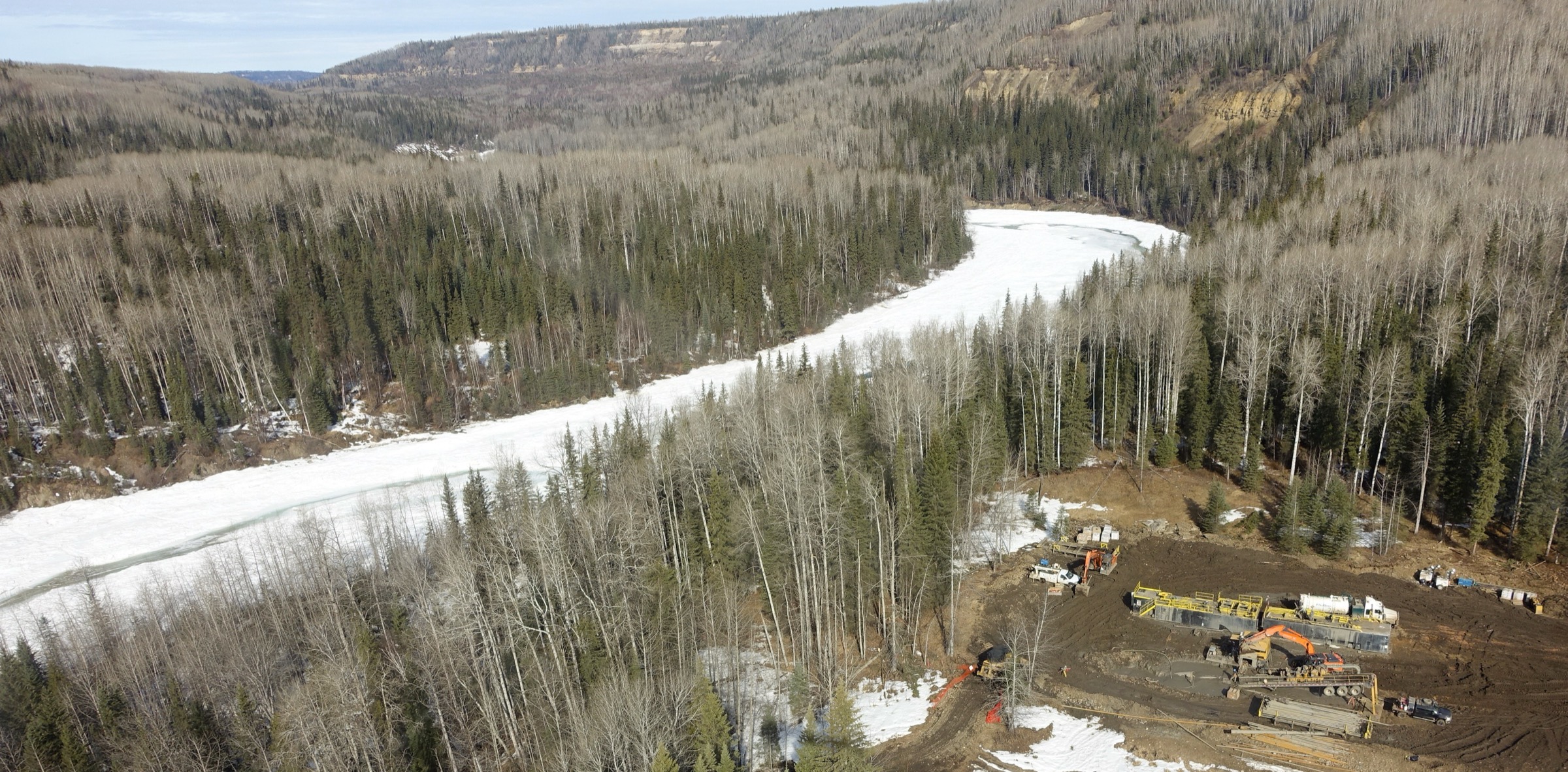
We know what the bore is going to do, because we drilled two thousand kilometres of them.
Technical HDD is a consultancy. Between 2005 and 2018 this name was on a drilling contractor that put 2,108.8 km of pipe in the ground across 5,722 bores without opening a trench. The rigs are gone. The engineering, the crews' methods, the drill records and the hard-won judgement are not — and that is now what we sell.
Trenchless work goes wrong in a small number of well-understood ways.
A profile that was never drillable in that ground. A pull force nobody checked against the pipe. An annular pressure limit nobody wrote down. A fluid programme copied from a different formation. A bore that strayed inside the separation distance from a live line. Each of these is cheap to catch on paper and expensive to find in the field.
We are retained to catch them on paper — and then, if you want, to stand over the rig while someone else drills it and make sure the plan survives contact with the ground.
Is it drillable at all?
Route and feasibility, method selection, and an honest answer about ground that will not take a bore. The cheapest crossing is the one you move fifty metres upstream.
Feasibility →Will this plan work?
Bore design, pull-force checks, the fluid programme, the execution plan and the inspection and test plan. A method statement read by someone who has actually run the rig it describes.
Bore design →Is it being built to the plan?
Our engineer on your side of the table, watching the pressures, the returns and the as-built, with the authority you give them to stop the pull.
Owner's representative →Most firms can advise on a river crossing. Far fewer have built an entire pipeline without a trench.
The usual picture of trenchless is a single long bore under an obstacle, with conventional trenching either side of it. That is the easy half of what we know.
The harder discipline — and the one this practice is built on — is trenchless mainline construction: installing the whole line as a chain of back-to-back drilled segments, so the ground between the tie-in points is never opened at all. A recent northeast British Columbia system was engineered this way at 149 trenchless segments totalling 31,267 m — about 80 per cent of a 65 km alignment — average segment 420 m, longest just over a kilometre, with roughly three-quarters of the permitted disturbance footprint designed to be handed back untouched.
It is a different engineering problem from a crossing, and most of the received wisdom about HDD does not apply to it. That is the ground we are most useful on.
Numbers, not adjectives.
Those are the operating figures of Technical HDD between 2005 and 2018, across five bases and a thirteen-rig fleet from twenty to three hundred and seventy-five tonnes. They are a record of what was drilled, not a claim about what we will drill for you — we no longer drill. They are here because they are the reason our engineering judgement is worth retaining.
An opinion on the method is worth more from someone who is not bidding the work.
When the firm that reviews the crossing is also the firm that wants to drill it, you are not getting engineering advice. You are getting a proposal with a covering letter.
Technical HDD owns no rigs, self-performs nothing, and has no stake in who gets the contract. There are good trenchless contractors in this market and we will tell you which ones suit your ground, your season and your risk — and then hold whichever one you pick to exactly the same standard.
We are paid for the opinion. Never for the work that follows it.
Tell us what is being crossed.
Give us the feature, the pipe size, the length and the ground, and we will tell you within a day whether it is a straightforward crossing, a difficult one, or one that should be moved. That first read costs you nothing.